The quest for the perfect, head-turning hair color often leads us down digital rabbit holes, past countless celebrity endorsements, and straight into the arms of the newest, most talked-about product. Recently, a fascinating name has been circulating in the more niche, adventurous corners of the beauty community: Darhergao hair dye. This product is quickly generating buzz, not just for its seemingly exotic name, but for the transformative results its users are sharing.
But what exactly is the secret behind the allure of Darhergao Hair Dye? Is this a high-tech formulation developed in a sophisticated lab, or perhaps a centuries-old coloring technique updated for modern use? While comprehensive, globally available technical specifications remain proprietary, the characteristics being attributed to Darhergao Hair Dye suggest it’s a serious contender in the premium hair color market, balancing potent pigment with a focus on hair health.
Deciphering the Darhergao Difference: Formulation and Focus
Any hair dye that breaks through the noise must offer a distinct advantage over established brands. For Darhergao Hair Dye, this seems to be a combination of intense color saturation and an emphasis on minimizing hair damage.
The Power of Pigmentation
The primary function of any dye is to deliver rich, true-to-swatch color. Speculations and user reviews hint that Darhergao hair dye excels in producing deeply saturated, multi-tonal results. This suggests the formula uses high-quality, micronized color molecules that are designed to penetrate the hair shaft efficiently and resist fading. Unlike some mass-market dyes that can yield flat, one-dimensional color, Darhergao Hair Dye appears to be formulated to reflect light and create depth, a hallmark of salon-grade products.
Prioritizing Hair Health
Modern hair coloring is no longer just about depositing color; it’s about maintaining the integrity of the hair structure. A key feature of successful contemporary dyes is their low-damage approach. We can reasonably infer that Darhergao Hair Dye likely employs one or more of the following:
- Ammonia Substitutes: Using milder alkalizing agents like MEA (Monoethanolamine) instead of harsh ammonia, which helps open the cuticle with less overall swelling and stress.
- Conditioning Complexes: Infusion of natural oils (like jojoba or coconut) or high-grade humectants and ceramides to fortify the hair cuticle and lock in moisture during the chemical process.
- Bond-Building Technology: The inclusion of ingredients designed to repair or protect the disulfide bonds within the hair’s cortex, a feature now standard in high-end coloring systems.
Application Mastery: Achieving the Professional Finish
Even the best dye can fail if the application is subpar. Using Darhergao hair dye effectively requires attention to the fundamentals of hair coloring, ensuring even saturation and proper development time.
Prepping for Peak Performance
A successful color session starts before the dye is even mixed.
- The 48-Hour Allergy Test: This is non-negotiable. Apply a small amount of the mixed dye to a discreet area (like behind the ear) to rule out allergic reactions.
- Cleanliness vs. Protection: Hair should not be freshly washed. The natural oils (sebum) act as a protective layer for the scalp. However, the hair must be free of heavy styling products or silicone buildup, which can block the dye from penetrating.
- Dye Barrier Application: Generously applying petroleum jelly or a thick conditioner along the hairline prevents skin staining, ensuring the vibrant color stays exactly where you want it.
Sectioning and Saturation
The biggest mistake in home coloring is inadequate saturation. For a complex color like one offered by Darhergao Hair Dye, systematic application is crucial.
| Step | Technique | Purpose |
| 1. Divide & Conquer | Separate hair into four major quadrants: front-to-back and ear-to-ear. Clip them securely. | Ensures systematic, manageable application. |
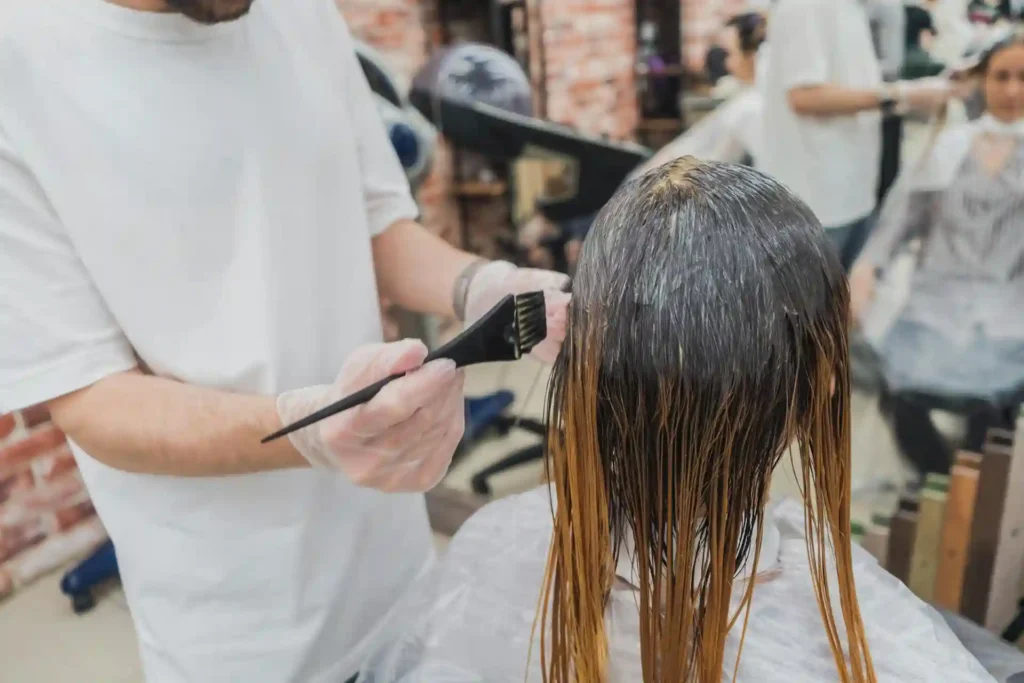
| 2. Mid-lengths & Ends | Apply dye to the root area first, then pull the dye through the rest of the hair only when the roots are nearing their processing time (usually the last 5-10 minutes). | Prevents over-processing and damage to previously colored hair. |
| 3. Emulsification | At the sink, before rinsing, add a small amount of water and massage the hair gently for one minute. | Breaks up the dye on the scalp and ensures even color distribution at the hairline. |
Longevity and Maintenance: Protecting Your Investment
A great hair dye is an investment, and like any investment, it requires maintenance. The longevity of your Darhergao Hair Dye shade is highly dependent on your post-coloring routine.
The Three Pillars of Color Preservation
- Water Temperature Control: Always rinse hair with the coolest water you can tolerate. Hot water aggressively opens the hair cuticle, causing the color molecules to escape and resulting in rapid fading.
- Color-Safe Cleansing: Switch exclusively to shampoos and conditioners labeled “sulfate-free” and “color-safe.” Sulfates are detergents that strip color and moisture from the hair.
- UV Protection and Heat Mitigation: The sun is a major culprit in color fading. Whenever possible, wear a hat or use a hair product with UV filters when exposed to direct sunlight. When heat styling, a high-quality thermal protectant is absolutely essential to shield the color pigments from breakdown.
Conclusion: Embracing the Future of Color
The rise of Darhergao hair dye in the conversation of beauty enthusiasts highlights a consumer shift towards products that promise professional-grade results without compromising hair health. While the brand’s specific proprietary ingredients may remain a mystery, its perceived success lies in delivering on the modern colorist’s trinity: intense color, superior shine, and minimal damage. For those who view their hair color as a form of self-expression, experimenting with this intriguing, high-performance dye could be the key to unlocking their most vibrant and captivating look yet.
Also Read: Xuri Li Sibounheuang: The Daughter of PnB Rock and Stephanie Sibounheuang.